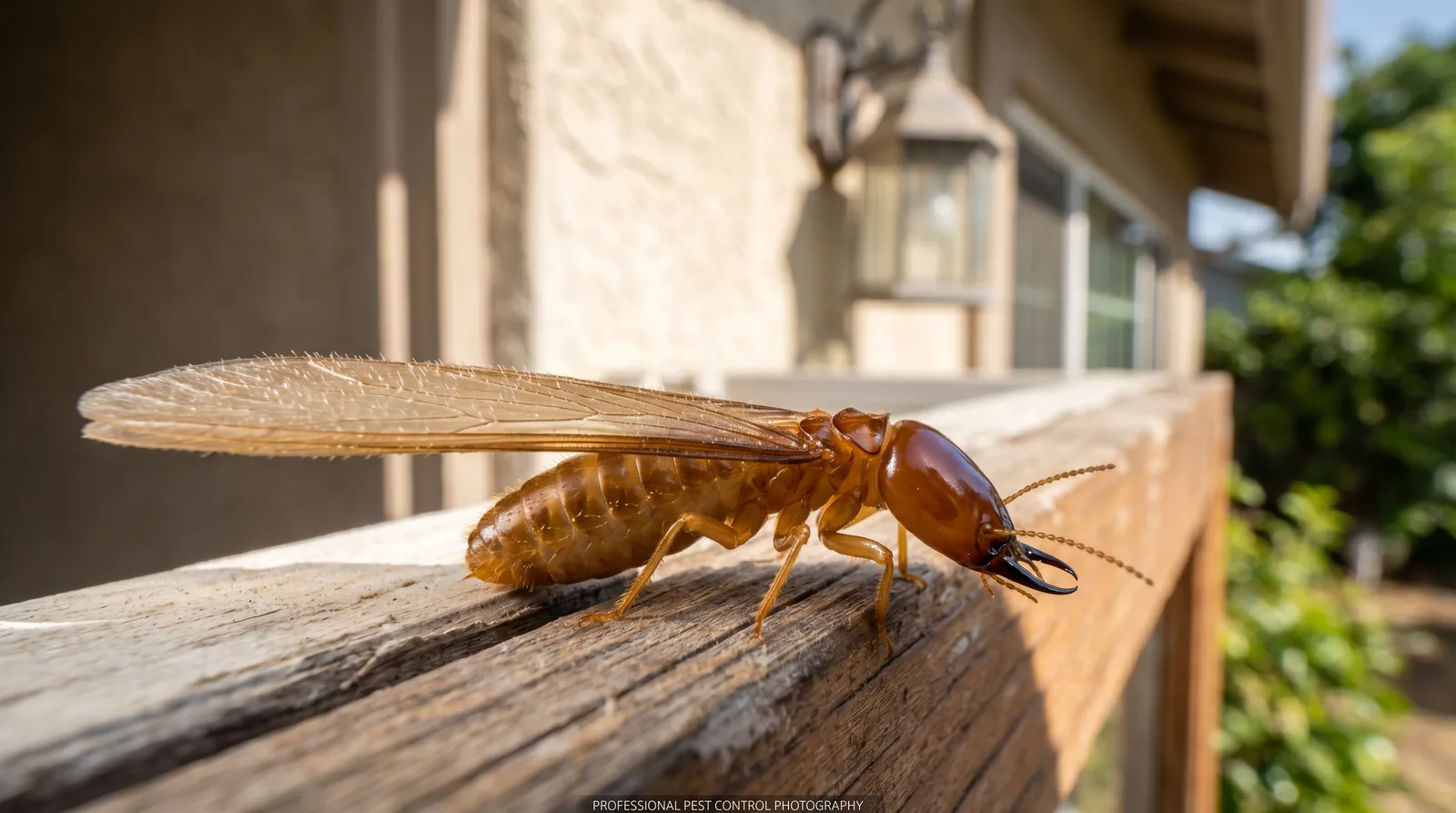
Formosan subterranean termites (Coptotermes formosanus) are widely considered the most aggressive and destructive termite species in the southeastern United States. Pest professionals call them "super termites" for a reason. While a single Formosan worker eats no more wood per day than a native subterranean termite, the colony size makes the difference.
According to the University of Florida Institute of Food and Agricultural Sciences (UF/IFAS), a single Formosan colony can contain several million termites, compared with several hundred thousand for native species, and foraging tunnels can extend up to 300 feet through the soil.
Why Formosan Termites Are a Serious Threat in Miami-Dade
Miami-Dade County has been a Formosan stronghold for decades. The first established colony in Florida was confirmed in a Hallandale condominium in 1980, and additional infestations were documented in Florida City in 2002 and Miami in 2004. Today, Formosan termite activity is established throughout the coastal and southern areas of Miami-Dade, including Homestead, Princeton, Leisure City, Naranja, Cutler Bay, Palmetto Bay, Pinecrest, South Miami, Coral Gables, and Kendall.
The damage adds up quickly. Termites cause an estimated $5 billion in structural damage across the United States each year, and Florida sits in TIP Zone #1, the highest termite infestation probability zone designated by the U.S. Forest Service. South Dade's warm, humid, subtropical climate keeps colonies active year-round, with no winter freeze to slow them down.
Why This Matters
A single Formosan colony can contain several million workers and forage up to 300 feet from the nest. Severe structural damage can occur in months rather than years, making early detection critical for South Florida homeowners.
How to Identify a Formosan Termite
Correct identification matters because each termite species requires a different treatment plan. Misidentifying a Formosan termite as a native subterranean or drywood termite can waste thousands of dollars on a treatment that does not address the actual colony.
Identification Characteristics
Body color
Yellowish-brown to caramel
Size
Swarmers 5/16 inch to 1/2 inch long
Wings
Pale, covered in fine hairs, roughly twice the body length
Soldiers
Large heads with curved mandibles, milky defensive secretion
Behavior
Swarm at night, attracted to lights, after warm rainy evenings
Formosan termites are easy to confuse with the closely related Asian subterranean termite (Coptotermes gestroi), which is also present in Miami-Dade. The simplest visual difference: Formosan swarmers have lighter yellow-brown to orange-brown heads, while Asian subterranean swarmers have darker brown heads. Because the two species look so similar, professional identification is the only reliable way to confirm which one you are dealing with.
When Do Formosan Termites Swarm in Miami-Dade?
Formosan termite swarming season in South Florida runs from late April through early July, with peak activity in May and June. UF/IFAS researchers note that swarming activity typically begins in late April to early May, triggered by a combination of warm temperatures and rainfall.
They swarm at night
Unlike Eastern subterranean termites, which swarm in daylight, Formosan alates emerge after sunset and are strongly drawn to porch lights, pool lights, and lit windows.
They follow rain
Swarms most often appear on warm, humid evenings within 24 hours of a rainstorm.
Massive numbers
A mature colony can release tens of thousands of swarmers. Seeing a large nighttime swarm near your home does not always mean your house is infested, but it does mean a mature colony is nearby and your property is at elevated risk.
If you find piles of discarded wings on windowsills, near sliding glass doors, or around exterior light fixtures the morning after a swarm, that is a clear sign that swarmers attempted to start a new colony at or near your home.
Signs of a Formosan Termite Infestation
Formosan termites are notoriously stealthy. By the time most homeowners notice damage, the colony has often been active for years. Watch for these warning signs:
Mud tubes
Running up foundation walls, support piers, or interior wall cavities. These pencil-width tunnels protect termites traveling between soil and wood.
Aerial carton nests
Unlike most subterranean termites, Formosans can build large carton nests (a hardened mixture of chewed wood, soil, and saliva) above ground, often in flat roofs, attics, wall voids, and around plumbing.
Hollow-sounding wood
Tap baseboards, door frames, and structural beams. Formosan-damaged wood often sounds papery or hollow because the colony eats out the interior, leaving a thin shell.
Bulging or blistered walls and floors
As galleries expand inside the wood, surfaces can warp, blister, or sag.
Discarded wings
Piles of small, equal-length wings near windows or doors after a warm spring or summer night.
Tight-fitting doors and windows
Damaged frames swell and shift, making doors stick.
Critical Warning
Because Formosan termites can establish aerial colonies, you can have an active infestation in your roof or attic with no mud tubes anywhere on the foundation. The absence of mud tubes is not proof the home is clear.
Professional Treatment Options
Effective Formosan termite control in Miami-Dade typically combines two or more of the following approaches, customized to the structure:
Liquid termiticide soil treatment
A continuous chemical barrier is applied around the foundation, eliminating termites that pass through the treated zone.
In-ground and above-ground baiting systems
Bait stations are installed around the property and, in cases of aerial activity, directly inside the structure.
Direct wood treatment
For localized aerial infestations, borate-based products and foam injections can be applied directly into wall voids and attic spaces.
Tent fumigation
Fumigation is the standard treatment for drywood termites and is sometimes used in combination with other methods.
Annual monitoring contracts
Because Florida's climate keeps termites active year-round, ongoing monitoring is the most cost-effective form of long-term protection.
At Dade Pest Solutions, we offer a comprehensive Termite Risk Mitigation Plan starting at $300, which includes full inspection, customized treatment, preventive barrier installation, and annual monitoring visits.
Call 305-330-5565 for Termite InspectionTermite Prevention Checklist
You cannot make your home termite-proof, but you can make it significantly less attractive to a foraging colony. Use this checklist twice a year:
- Fix all plumbing leaks and roof leaks promptly
- Keep mulch at least 12 inches away from the foundation
- Maintain at least 6 inches of visible foundation between soil and wood siding
- Clean gutters and ensure downspouts discharge water 3+ feet away
- Trim tree branches and shrubs away from roof and walls
- Remove dead tree stumps, scrap lumber, and firewood piles
- Seal cracks in the foundation and around utility penetrations
- Replace any wood with soil contact using concrete or treated lumber
- Schedule a professional termite inspection at least annually
- During swarm season (late April through July), turn off non-essential exterior lights
Frequently Asked Questions
Schedule Your Termite Inspection Today
If you suspect Formosan termite activity or want to protect your home before an infestation takes hold, contact Dade Pest Solutions. We are family-owned, based in Homestead, and hold FDACS Pest Control License JB337153.

Shaun Judy
Founder & CEO, Dade Pest Solutions
Shaun Judy is the founder and CEO of Dade Pest Solutions, a family-owned pest control company serving Miami-Dade County. With FDACS Pest Control License JB337153, Shaun leads a team dedicated to protecting South Florida homes and businesses from termites, rodents, and other pests.