When Pest Control Doesn't Work And What to Do About It
Most pest control companies won't say this out loud: treatments fail all the time. Not because the products don't work but because of factors that have nothing to do with the product. Here's the honest breakdown from a company that's seen it all in South Florida.
By Shaun Judy, Founder & CEO of Dade Pest Solutions
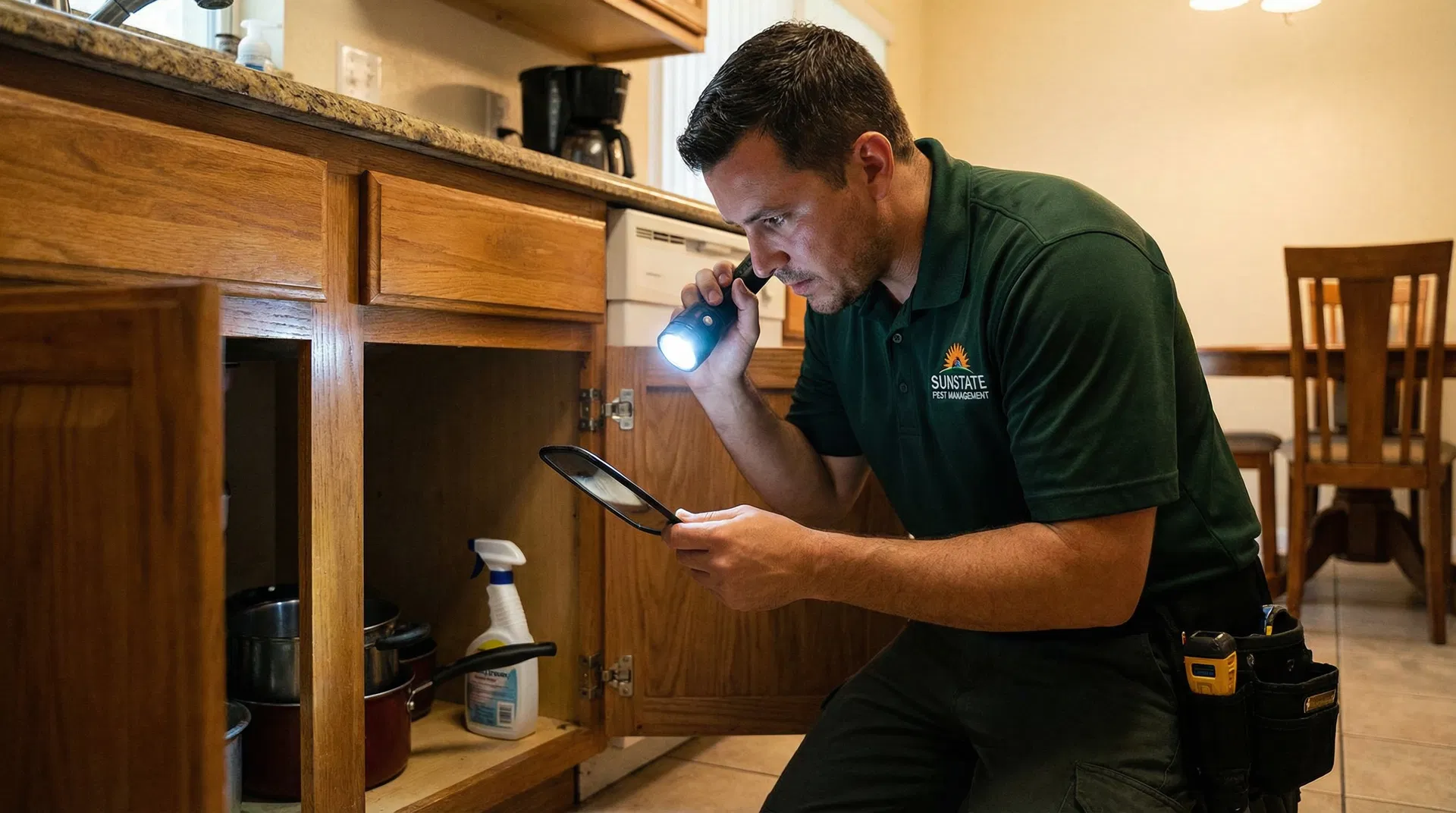
A note from Dade Pest Solutions
We're writing this because we've taken over accounts from other companies where the homeowner was frustrated, had spent hundreds of dollars, and still had bugs. In most of those cases, the treatment itself wasn't the problem. This article is about the real reasons and what you can do about them.
The Real Reasons
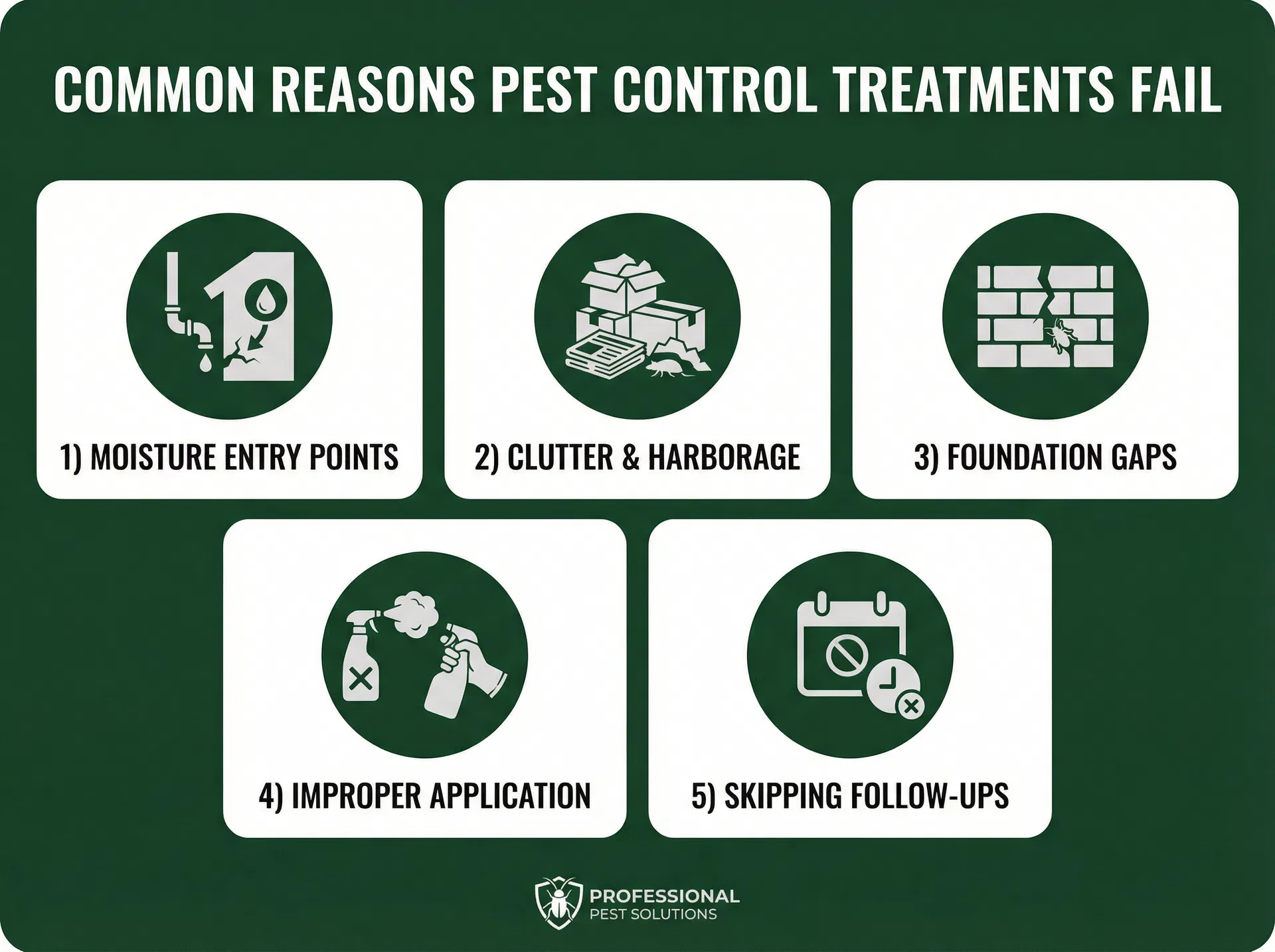
5 Reasons Pest Control Treatments Fail
These are the five most common root causes we see when a homeowner calls us after another company's treatment didn't hold.
Moisture and Water Sources
South Florida's humidity is a pest magnet. Leaky pipes under sinks, condensation around A/C units, and standing water in gutters or planters create the ideal breeding environment especially for German roaches and mosquitoes. No treatment will hold if the moisture source is still there.
What to do
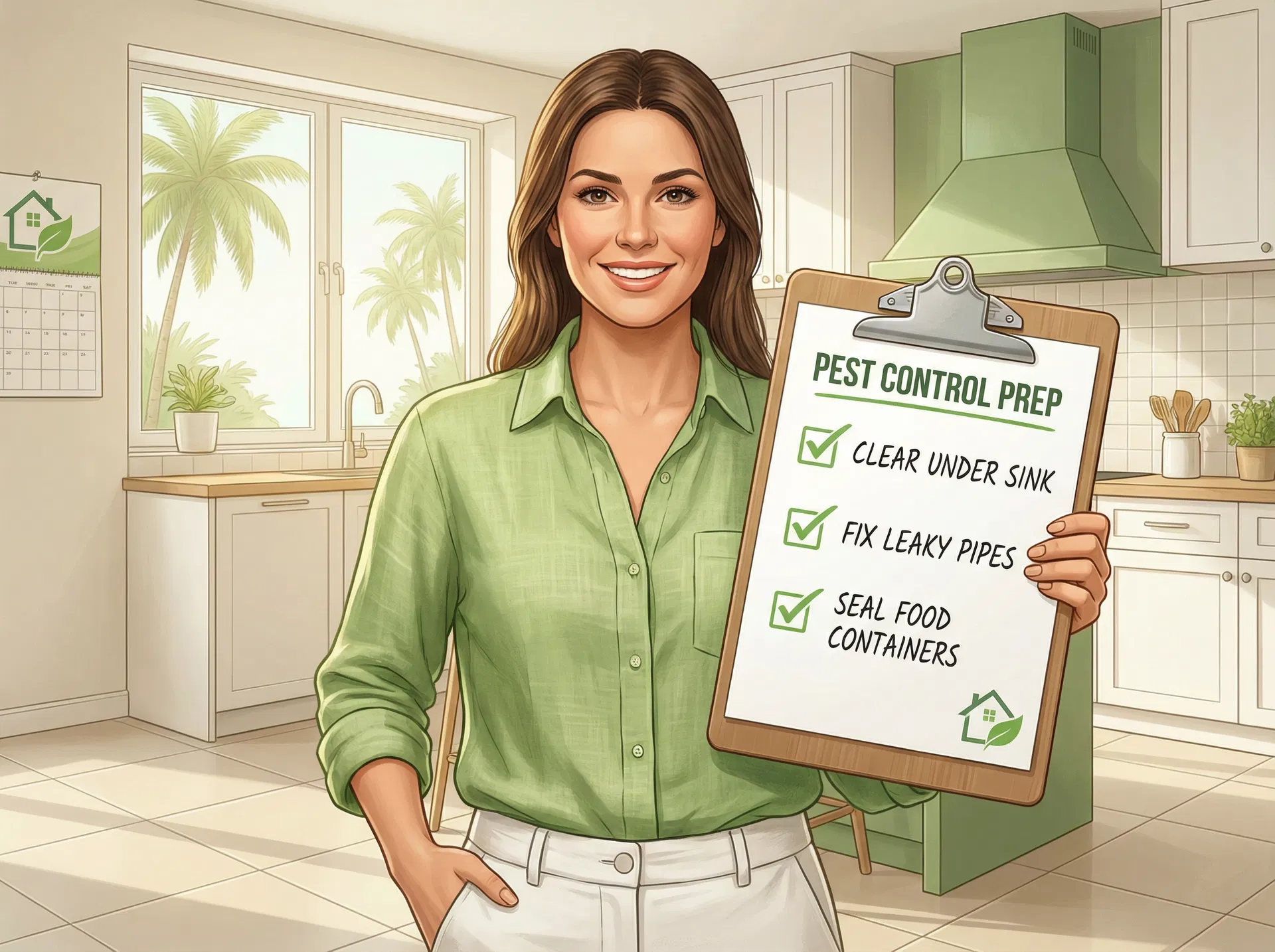
Fix leaky pipes, clear gutters, and address A/C condensate drainage before your technician arrives.
Clutter and Harborage Areas
Cardboard boxes, stacked paper bags, and cluttered closets give pests especially roaches protected harborage zones where pesticides can't reach. Treatments applied to the perimeter won't penetrate deep into these hiding spots.
What to do
Declutter storage areas, replace cardboard boxes with plastic bins, and clear under sinks and behind appliances.
Structural Entry Points
Gaps around pipes, cracks in the foundation, torn door sweeps, and unsealed utility penetrations are open invitations. Even the best treatment won't stop re-infestation if pests can walk back in freely. A torn door sweep or flattened weather stripping on a sliding glass door is one of the easiest entry points to miss, since the door still closes and locks. JDM Sliding Doors covers how to check for it in their guide to Sliding glass door weather stripping. For a rodent-specific look at how accessible openings and roofline conditions can matter even in a clean home, see rodent prevention in South Florida homes.
What to do
Seal gaps with caulk or steel wool, replace worn door sweeps, and install door brush seals on garage doors.
Improper Product Selection or Application
Not all pest control products are equal, and not all technicians apply them correctly. Using a general-purpose spray on a German roach infestation which requires gel bait and IGR will push the colony deeper and make it harder to treat. Resistance to certain chemical classes is also a real factor in South Florida.
What to do
Ask your technician specifically what product they're using and why it's appropriate for your pest and infestation level.
Skipping Follow-Up Treatments
A single treatment rarely eliminates a full infestation. Pest eggs are often resistant to initial treatments, meaning a second or third visit is needed to break the reproduction cycle. Homeowners who cancel after one visit often see the problem return worse than before.
What to do
Commit to the full treatment schedule. For German roaches, this means one initial visit plus two follow-up visits. The documented schedule is approximately two to three weeks apart and may be adjusted for findings and label restrictions; confirm your written schedule.
Your Role in the Process
What Homeowners Can Do to Get Better Results
Pest control is a partnership. The technician brings the expertise and the products but the homeowner controls the environment. Here's what makes the biggest difference in South Florida homes.
- Fix all leaky pipes and address moisture issues before treatment day
- Clear under sinks, behind appliances, and inside cabinets so the technician can access harborage areas
- Store all food (including pet food) in sealed containers
- Remove cardboard boxes replace with plastic bins
- Follow label and technician instructions about cleaning treated areas; ask which surfaces to avoid and for how long
- Keep all follow-up appointments don't cancel after one visit
- Report re-activity to your technician promptly, not weeks later
Know Your Rights
When You Should Call for a Re-Treatment
Report continued or new activity promptly. DPS can review the issue, inspect as appropriate, and confirm whether covered-pest re-service or separate work applies under your written terms.
Still seeing live pests 2+ weeks after treatment
Call and request a follow-up inspection. Ask the technician to identify whether it's re-infestation from outside or a surviving colony from the original treatment.
Seeing pests in new areas that weren't treated
This may indicate the colony was disturbed and migrated. Request an expanded treatment that covers the new activity zones.
Infestation returned within the guarantee period
German-roach service has a 90-day guarantee after the final visit, subject to preparation, sanitation, and written terms. Call DPS so the issue and applicable coverage can be reviewed.
Activity increased after treatment
This is often normal in the first 7 to 14 days as pests are flushed out. If it continues past 2 weeks, call for a follow-up. Don't wait the sooner you report it, the easier it is to address.
How We're Different
How Dade Pest Solutions Prevents These Problems
We built our service protocols specifically around the reasons treatments fail. Every program includes a root-cause inspection, the correct product for the specific pest, and scheduled follow-ups not just a single spray and a bill.
90-Day
after the final visit, subject to prep, sanitation, and terms
3 Visits
included in every German Roach program
Local
professional contact available
Common Questions
Frequently Asked Questions
Is it normal to still see pests after a treatment?
Some treatments temporarily increase visible activity, but more sightings do not prove that a product is working. Monitor activity under the service-specific plan and report concerning, increasing, or new activity promptly. Results depend on the pest, product, infestation, preparation, and conditions; no fixed two-week period guarantees decline.
How long does pest control take to work?
Timing depends on the pest and method. General perimeter treatments may show visible changes within 24 to 72 hours, and German-roach baiting may show reduction over the first one to two weeks; these are estimates, not eradication deadlines. German-roach service uses three visits under its written plan. Bed bug treatment often needs multiple visits, with timing based on the method, infestation, preparation, and inspection findings. DPS will confirm your follow-up schedule.
Why do pests come back after treatment?
The most common reasons are: (1) the root cause (moisture, entry points, food sources) was not addressed, (2) the treatment schedule was not completed, or (3) re-infestation from a neighboring unit or property. A recurring protection program with quarterly visits is the most reliable way to prevent re-infestation.
What should I do before a pest control treatment?
Follow the preparation instructions for your service. Clear access to treatment areas and tell us about children, pets, or areas to avoid. German roach service requires kitchen cleaning, clutter removal, and removing pet food and water bowls from treatment areas. Do not move heavy appliances or disturb electrical, gas, or plumbing connections without appropriate help. Ask what access is actually needed for your home.
Can I do pest control myself?
For minor, early-stage infestations of some pests (ants, spiders), DIY products can provide temporary relief. However, for German roaches, bed bugs, termites, or any established infestation, professional treatment is strongly recommended. Incorrect DIY application can scatter pests, create resistance, and make professional treatment harder.
What makes Dade Pest Solutions different from companies where treatments don't work?
We use inspection findings to select pest-specific methods and explain preparation, monitoring, and the agreed follow-up scope rather than relying only on a general spray. Our 3-visit program starts at $549, with a 90-day guarantee after the final visit, subject to prep, sanitation, and written terms. Completing it, then enrolling in RPP, adds a lifetime German-roach warranty while enrolled and compliant with its terms.