Bugs in flour or rice may be pantry pests, but the first step is not to spray the pantry. I recommend isolating the suspect package, checking nearby dry foods, and finding the source before deciding what help is needed.
Quick answer: Seal and discard visibly infested food, inspect other susceptible packages, vacuum accessible shelf cracks and spilled food, and store unaffected foods in sturdy, tightly closed containers. Do not spray food or assume that catching a few moths has removed the source.
This guide uses real homeowner questions as prompts and university and National Pesticide Information Center guidance for the answers. It is not a diagnosis from a photograph, local infestation data, or an endorsement from the people whose questions inspired it.
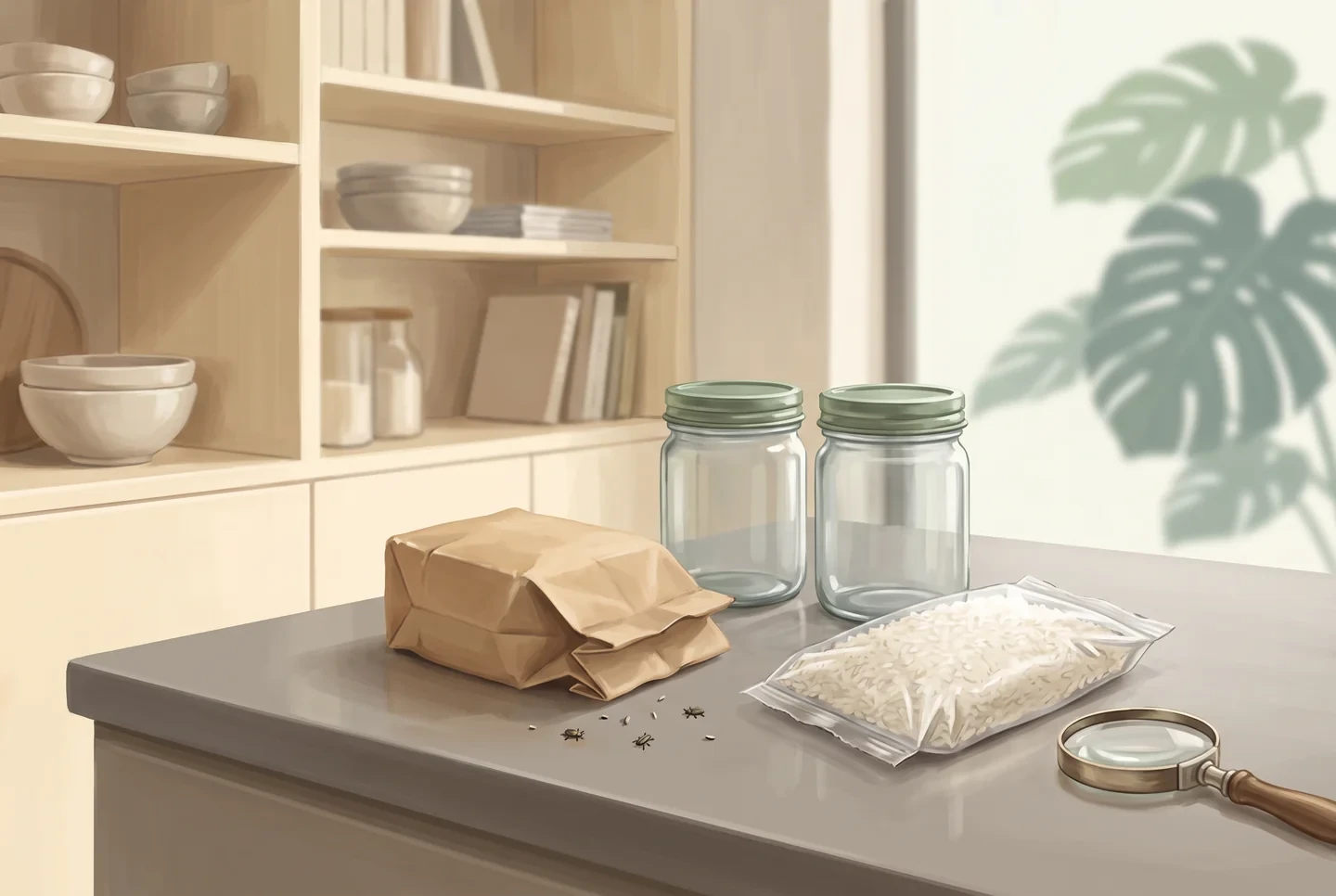
Are the bugs in my flour or rice pantry pests or cockroaches?
Small insects associated with dry food may be pantry moths, flour beetles, grain beetles or weevils. The location is a clue, not a species identification. Not every small beetle or moth in a kitchen is a stored-food pest.
- Webbing and small caterpillars: Indianmeal moth larvae feed in stored food and leave silk. Mature larvae can move onto nearby walls or ceilings to pupate.
- Small crawling beetles: Several beetle species infest flour, cereal, spices and other dry goods. Do not identify one from its size or the package label alone.
- Holes in whole grains: Rice and granary weevils are associated with whole grains and seeds. A bug in rice is not automatically a rice weevil.
UF/IFAS pantry and stored-food pest guidance describes the range of possible insects. If the signs instead involve cockroaches around sinks or appliances, my South Florida cockroach-prevention guide explains that different problem. Do not treat either article as confirmation of the insect in your home.
A sealed package can still be the source
Pantry insects can arrive in purchased food, and opened or thin packages can be invaded later. This does not establish where a particular package became infested, and it is not evidence that your kitchen is dirty or that a named store caused the problem.
The National Pesticide Information Center's pantry moth guidance explains that larvae can chew through plastic bags and thin cardboard. A closed grocery packet and a sturdy, tight-lidded container are not the same protection. Check contents before transferring food; a new jar cannot remove insects already in it.
My pantry inspection checklist before holiday baking
Pulling out flour, rice or a cake mix you have not used recently is a good reason for a closer look. I am using holiday cooking as a practical reminder, not claiming that pantry infestations peak in November in Miami-Dade.
- Inspect the suspect food. Look for crawling insects, larvae, webbing, damaged packaging or unusual clumping. Clumping by itself is not identification.
- Check neighboring dry goods. Include cereal, pasta, nuts, dried fruit, spices and forgotten mixes, not just the first bag where you saw movement.
- Look beyond the cooking shelf. Dry pet food, birdseed and decorative dried plant material can also support stored-food pests.
- Inspect accessible folds and crevices. Check package seams, shelf corners and nearby drawers for insects or cocoons without damaging the cabinetry.
- Keep a simple record. Note the product, location and date. If you request identification, a clear photograph of the insect and package can help a professional, but a photograph may not settle the identification.
Remove the source before reaching for a spray
The University of Minnesota Extension pantry-pest guide recommends discarding contaminated food and thoroughly cleaning the affected storage area. Its general stored-food guidance is useful here; it is not a South Florida seasonal survey.
- Contain visibly infested packages. Seal them in a bag and remove them to the outside trash promptly. Do not leave an open package on another kitchen shelf.
- Empty the affected storage space. Inspect susceptible items individually rather than moving the whole collection into another cabinet.
- Vacuum accessible cracks and spilled food. Remove loose flour and crumbs. Empty the vacuum or discard its bag after use so the collected material does not become another source.
- Clean empty shelves. Wash appropriately with soap and water, then let the area and containers dry before returning food. Do not mix cleaning products or apply chemicals to food.
- Protect unaffected food. Use clean glass, metal or thick-walled food-storage containers with tight-fitting lids. Avoid mixing old product with a fresh refill.
- Inspect again if activity continues. Check for another package, spilled material or cocoons beyond the first shelf.
This vacuum advice is for pantry insects and food debris, not suspected rodent waste. If the material may be rodent contamination, stop and seek appropriate cleanup advice rather than applying this checklist.
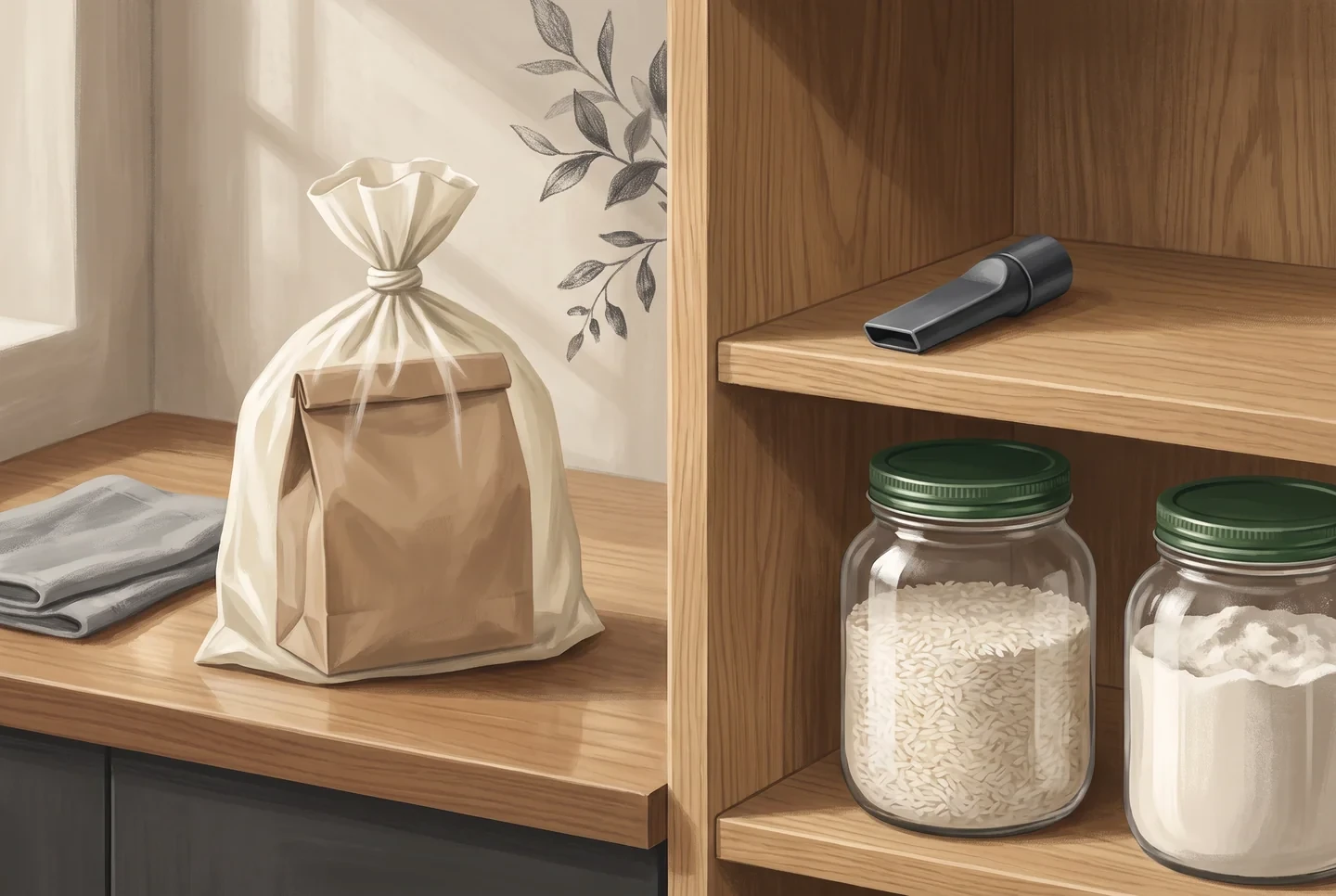
Why moths can keep appearing after a deep clean
UF/IFAS Indianmeal moth guidance explains that larvae can leave food before pupating. Adults may emerge from those pupae later. A missed package or food residue can also support activity, so a sighting after cleanup does not by itself tell you which explanation applies.
Check accessible nearby cocoons and food sources rather than repeatedly spraying the same shelf. UC IPM pantry-pest guidance emphasizes inspecting and removing infested material. I do not promise a fixed elimination date or permanent protection from one cleaning session.
What not to do around stored food
Do not spray food, use a fogger as a substitute for source removal, or improvise a pantry pesticide treatment. Minnesota Extension notes that household insecticides do not reach insects inside food packages and recommends against insecticide use in stored-food cupboards. UF/IFAS discusses professional treatment options in some circumstances, but this article is not a product recommendation or authorization to treat food-contact surfaces.
Do not rely on bay leaves or stronger disinfectants to make the source disappear. Keep any insecticide-contaminated food out of use and follow the product label and appropriate professional guidance. I am not prescribing oven, freezer or dry-ice procedures to salvage food.
Pantry pest questions homeowners ask
How can bugs get into a sealed flour or rice package?
Unopened packaging is not always insect-proof. Insects may already be present in a purchased product, and some larvae can enter thin packaging through seams or chew through it. Moving food into a jar does not remove insects or eggs already inside. Inspect the food and clean the container before refilling it.
Do I need to throw away everything in the pantry?
Inspect all susceptible foods, but do not assume every item is infested. Discard visibly infested packages and check nearby flour, rice, cereal, nuts, spices, pet food and birdseed. A package that looks normal is not proof of absence; seek advice if you cannot assess it confidently. Do not use this guide as food-safety clearance.
Why am I still seeing moths after throwing away the infested food?
Some larvae may have left the package to pupate, or another source may have been missed. Adults can emerge after the original food is removed. Inspect nearby packages, shelf cracks and accessible cocoons, and record continuing activity. Persistent sightings call for renewed inspection, not a promise that one cleanup will finish the problem.
Will pantry moth traps fix the infestation by themselves?
Traps do not replace finding and removing infested food. Indianmeal moth pheromone traps attract adult males and can help monitor activity. They do not attract pantry beetles or remove larvae from packages. Use a trap suited to the identified insect and follow its instructions; a falling trap count alone does not prove the source is gone.
Can I sift out the bugs and still use the flour or rice?
I recommend discarding visibly infested food rather than sifting out insects. Removing insects does not remove all webbing, waste or other contamination. Killing insects with a cold or heat process is not the same as restoring food quality. This article does not certify any food as safe to eat or prescribe a salvage procedure.
Do bay leaves or stronger cleaning chemicals stop pantry pests?
Do not rely on those remedies. University of Minnesota Extension reports no evidence that bay leaves prevent or eliminate stored-food insects. Bleach, ammonia and disinfectants do not keep pantry pests from returning and can create food-contact hazards. Remove the source, vacuum accessible food debris and clean empty shelves appropriately instead.
When to ask Dade Pest Solutions for help
If you cannot identify the insect, keep finding activity after source checks, or are unsure which household service applies, contact our team or call 305-330-5565. Explain what you found and what you have already inspected.
Our Residential Protection Program service page explains the scheduled residential insect-service option. A recurring plan does not replace removing infested food. Confirm whether the identified pantry pest and any proposed work are covered by your property's written service scope; this guide does not add coverage, pricing or a new guarantee.
Dade Pest Solutions serves residential properties in Homestead, Cutler Bay, Palmetto Bay, Pinecrest, South Miami, Coral Gables and Kendall. Confirm your address and availability directly with the team.
Sources and homeowner-question inspiration
The UF/IFAS, university Extension, NPIC and UC IPM links above support the factual guidance. These two public Reddit discussions inspired questions about sealed containers and avoiding unnecessary food waste. Their comments are not verified treatment instructions, local demand evidence or endorsements of DPS.
About the Author

Shaun Judy
Founder & CEO, Dade Pest Solutions
Shaun Judy is a South Florida native and the founder of Dade Pest Solutions. With over 17 years of hands-on pest control experience, he holds FDACS Certified Operator License JF293201 and has been featured in PCT Magazine (Pest Control Technology). Shaun personally oversees all pest control operations and treats every property as if it were his own.